
痞子英雄
Naslen Gafoor Turns 25: The Unassuming Meteor Of Malayalam Cinema_我的网站

一 | In an industry celebrated for its grounded storytelling and ever-expanding creative scope, Malayalam cinema has always had a sharp eye for talent that can carry both wit and weight. And yet, there are some actors who arrive not with a bang, but like a slow-burning ember: steady, self-assured, and impossible to ignore once the smoke clears. Naslen K Gafoor is that ember. At 25, he already carries the quiet confidence of someone who knows exactly where he belongs: right at the heart of the new Malayalam wave. Hailing from Kodungallur in Kerala, Naslen’s screen debut in Thanneer Mathan Dinangal (2019) wasn’t designed to steal the spotlight. But it did. As Melvin, the motormouth classmate with a knack for sly digs and one-liners, Naslen didn’t just elicit laughs. He exuded that rare quality of feeling entirely unscripted. That natural ease, a kind of controlled chaos wrapped in charm, immediately caught the audience’s attention. Here was someone who wasn’t trying to act cool, he just was. But what sets Naslen apart is not just how he began, but what he’s done since. The Steady Curve of Craft In an industry that often rushes to anoint its next sensation, Naslen has taken a more grounded path, one that reflects not the frenzy of overnight stardom, but the finesse of patience. Following his debut, he moved into darker terrain with Kuruthi (2021), a tense, socially charged thriller where he played Rasool, a teenager navigating communal tension and moral ambiguity. The film’s heavy tone was a sharp detour from his comic roots, and Naslen, in a role that could’ve easily been overshadowed, held his ground with a calm, brooding restraint. In Home (2021), a touching domestic drama, he slipped into the role of a millennial son with the same kind of quiet conviction. And in Keshu Ee Veedinte Nadhan, even in a smaller role, he managed to bring levity without ever feeling like filler. There’s an elasticity in his performances; one that doesn’t demand space but earns it. This ability to shapeshift without calling attention to the shift is what makes Naslen a standout in his generation. He doesn’t rely on gimmicks or heightened theatrics. He understands tone, rhythm, and, most importantly, silence. There’s power in the pauses, and Naslen knows where to place them. The Premalu Phenomenon Then came Premalu (2024). The film was never designed as a megahit, but like the best of Malayalam cinema, it found its resonance in relatability. As Sachin, a kind-hearted, emotionally awkward engineering graduate navigating unspoken feelings and second chances, Naslen delivered a performance that was both endearing and exact. The kind of role that required an actor to be funny without clowning, vulnerable without sobbing, and hopeful without being naive. He nailed it. What followed was nothing short of a sensation. Premalu shattered expectations at the box office, becoming one of the top-grossing Malayalam films of all time. But perhaps more interesting than the numbers was the public reaction. Even as the film’s success was celebrated, there was a quiet murmur among fans online: Why was Naslen, the heart of the film, missing from the spotlight? It wasn’t outrage, just a collective acknowledgment that the actor who made you feel the most was somehow being spoken about the least. In some ways, that reflects Naslen’s approach to fame. He’s not elbowing his way to the centre. He’s more comfortable on the fringes, letting the work speak. And yet, it’s impossible not to notice when the voice is that clear. Jojo Johnson and the Boxing Ring If Premalu was the quiet breakthrough, Alappuzha Gymkhana (2025) was the full-bodied leap. As Jojo Johnson, a carefree college kid thrust into the sweaty, brutal world of amateur boxing, Naslen offered a performance that required physical grit and emotional growth. He trained, transformed, and threw punches that didn’t just hit faces but landed emotionally. What could’ve been a conventional sports flick turned into something more nuanced, and Naslen was at the centre of it all. It became a summer hit, reaffirming that this wasn’t a fluke. He could now headline films, and carry them, weight class included. The Road Ahead: Superheroes and Sequels The Malayalam film industry, while deeply rooted in realism, has begun to flirt more freely with scale and spectacle. Naslen’s upcoming ventures are proof of that shift. A much-anticipated Premalu sequel is in the works, albeit delayed, and more intriguingly, he’s been cast in Lokah: Chapter One – Chandra, a superhero film backed by Dulquer Salmaan’s Wayfarer Films. The Charm of the Unbranded Star At a time when branding often outweighs performance, Naslen is an outlier. He isn’t everywhere, and maybe that’s the trick. His face isn’t on every poster, and he doesn’t flood feeds with curated content. What you get, instead, is the feeling that when he is on screen, you’re about to watch something real. Something lived-in. There’s no desperation to “arrive.” He’s already here, just taking the long way around. The Long Game Naslen Gafoor represents a kind of career arc that’s becoming increasingly rare; where each role is a rung, not a pedestal. He’s building something, not grabbing it. The comparisons to stars like Nivin Pauly or Fahadh Faasil are inevitable, but also unfair. He isn’t mimicking a template; he’s sketching his own. He may not yet be the most visible name in the industry but make no mistake: he’s being watched—by fans, by filmmakers, and by a generation of actors learning that charm doesn’t always need volume. See Also: Ranbir – Alia wedding: Alia Bhatt’s Juhu home gets decorated。
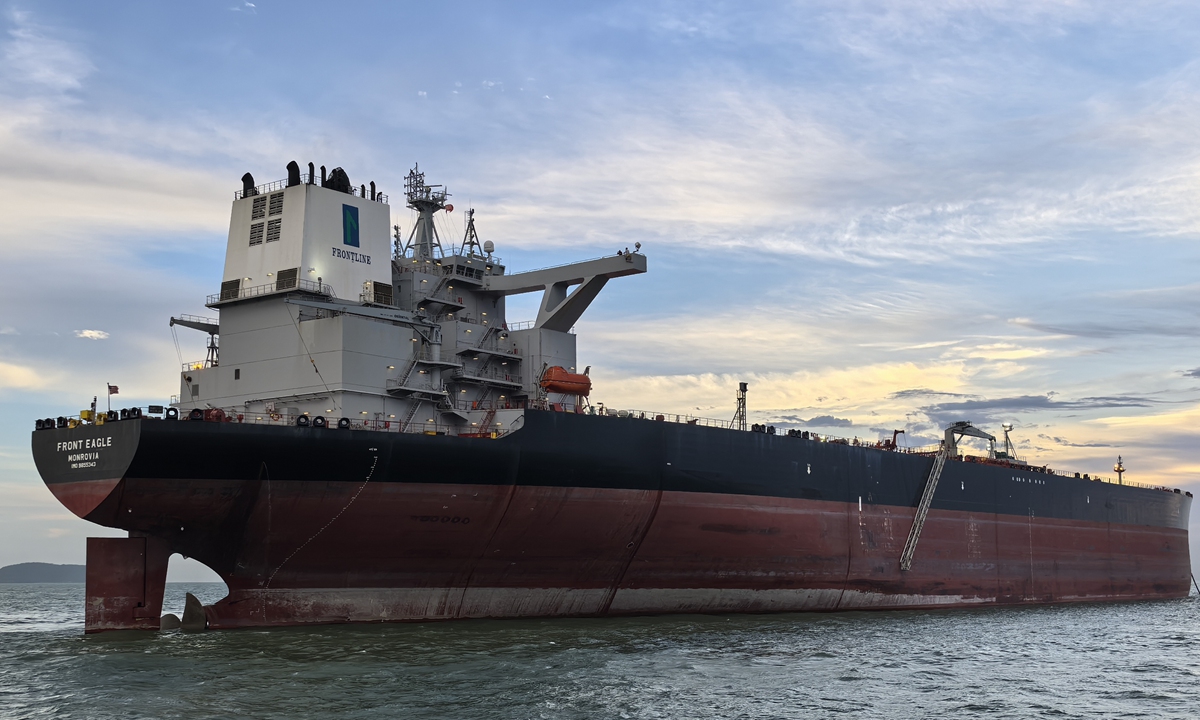
In 2025, two crude oil tankers collided at the eastern entrance to the Strait of Hormuz, 24 nautical miles off Fujairah, United Arab Emirates, media reported.
Owned by oil tanker operator Frontline, the Liberia-flagged vessel Front Eagle collided with the Antigua and Barbuda-flagged vessel Adalynn on the morning of June 17, 2025.
The Adalynn was damaged in the fire. While the Front Eagle was undergoing repairs in Shenzhen, South China's Guangdong Province, Global Shipping Holding Ltd., which owns the Adalynn, applied to Guangzhou Maritime Court for its arrest. Frontline provided a cash security of 203 million yuan to release the arrest and applied to establish a limitation fund for maritime claims.
The court approved the application and allowed Frontline to establish the limitation fund, setting the amount of the fund at 168 million yuan.
Guangzhou Maritime Court held four pretrial conferences on October 11, 2025, January 12, May 6 and July 13, 2026 to complete preparations for evidence examination, technical investigations and reported the relevant pretrial arrangements to the provincial high court, the Global Times learned from the court.
The court held a public hearing for the case on July 14, 2026.
No government agency had conducted an investigation into the collision, and no official findings were issued after the accident. Taking into account the unique burden-of-proof challenges in maritime collision disputes, Guangzhou Maritime Court took measures to preserve key evidence when handling the vessel arrest, including navigation logs, AIS data, voyage data recorder (VDR) records and CCTV footage, the court told the Global Times in a statement on Sunday.
Under a process that involves exchanging evidence inventories, sealing materials simultaneously and jointly reviewing them after evidence submissions, the court helped ensure the authenticity of critical records and laid the groundwork for determining the facts of the case.
As the two sides and their respective maritime experts reached sharply different conclusions over liability, the court introduced a maritime technical investigator mechanism, with the consent of both parties, allowing technical experts to participate throughout the proceedings. Drawing on the preserved evidence, investigators reconstructed the collision, assessed the vessels' encounter situation and clarified the parties' respective responsibilities.
Following the hearing, the court facilitated mediation, and the two parties reached a settlement agreement on July 27, 2026. On July 31, the court organized the distribution of the maritime liability limitation fund among creditors involved in the foreign vessel collision dispute and related charter-party disputes.
Representatives of the Adalynn traveled from overseas to the court to present a letter of appreciation and a commemorative banner in recognition of the court's efforts, according to the court statement.
After the Guangzhou Maritime Court accepted the case, both parties agreed to apply Chinese law to establish a maritime liability limitation fund and resolve their substantive dispute, breaking away from the long-standing reliance of international shipping disputes on European and US courts and legal systems.
Choice of justice
Bilov Viacheslav, a representative of Global Shipping Holding Ltd., told the Global Times that the main reason they chose a Chinese court to mediate the case is that "we want absolutely fair, unbiased approach to this issue. Because nowadays in this world, there are some countries which believe that they are authorized to give instruction to all others, which definitely is having influence on the decisions of the judge on the approach to the case."
Viacheslav gave the Chinese court's handling of the case a five-star rating, saying he had expected the dispute to take at least three years to resolve, but the Chinese court settled it within just one year. He also praised the judges and lawyers for their commitment to advancing the case throughout the proceedings.
"The judges and lawyers worked to advance the case with the same level of commitment as I did, even though the case directly concerned my own interests. This left a deep impression on me about litigation in China," Viacheslav said.
The case involved two foreign parties and a collision that occurred near the Strait of Hormuz, with no direct connection to China or Guangzhou Maritime Court initially. The fact that the parties chose to seek vessel arrest in China and agreed to apply Chinese law demonstrates the credibility and appeal of China's maritime judicial system, Wu Guining, vice president of the Guangzhou Maritime Court, who served as the presiding judge of the case, told the Global Times.
The court also introduced a maritime technical investigator mechanism in the case, an innovation aimed at addressing complex technical issues arising from vessel collision accidents, Wu said, noting that through technical investigations, the court was able to establish the facts of the case more efficiently, highlighting the integration of professional maritime investigation capabilities with China's specialized maritime adjudication system.
The case demonstrates China's ability to handle major, complex and cross-border maritime disputes with professional expertise, Wu said.
The handling of the collision between the two vessels is just one example of how Chinese courts have been dealing with a growing number of foreign-related maritime cases in recent years.
The Global Times learned from China's Supreme People's Court (SPC) in October last year that over the past 40 years, Chinese courts have handled a total of 88,000 foreign-related maritime cases involving parties from 146 countries and regions.
At a lecture held by the SPC on Friday, Shen Hongyu, director of the Fourth Civil Division of the SPC, told the Global Times that in recent years, Chinese courts have become more influential in participating in and promoting global ocean governance reform. Maritime justice serves as an important instrument for practicing the vision of a maritime community with a shared future and for advancing the reform of the global ocean governance system.
。
Current article:http://wvt0afi.licuqiangraosuiheizhua.pics/news/20260826_9241.html
Published on:14:58:37


1
英特尔介绍 Crescent Island 加速卡:面向 AI 推理,额定 350W、最高 480GB 内存2
清华与广州黄埔及澳门青创签署合作协议 共建未来设计创新中心3
快速反弹,是底部吗?4
事态升级,美伊都在等中方信号,伊朗派人进京,对华有个不情之请,兵器志,原创 事态升级,美伊都在等中方信号,伊朗派人进京,对华有个不情之请5
国台办:希望两岸年轻人同心同行 为推动两岸关系和平发展汇聚青春力量6
भिवानी में गड्ढे में संतुलन बिगड़ने के बाद पेड़ से टकराई कार, युवक की मौत7
《火焰纹章》新作还有"女娲"?史上首次自定义捏脸8
Xi urges learning from Jiang Zemin's far-sightedness, strategic thinking9
火箭媒体人:火箭新赛季能赢下54到55场 如健康或成总冠军黑马10
China, India hold special representatives talks on boundary question in Beijing11
「1500円なのに軽すぎる」 ワークマンの“高コスパシューズ”に驚きの声 「とにかく歩きやすい!」「買って損なし」12
强台风“白海豚”可能明天登陆我省13
网站安全防护指南:防DDoS、防CC、防SQL注入14
ST洲际:上半年净利润1.94亿元 同比增长288.9%15
百岁山携手亚洲排联,以品质致敬新征程
- 随机推荐
1
76人一夜4消息!詹姆斯影响5队引援,马克西苦练+14+2名单留后手2
【新加坡留学】初中生留学新加坡的4种途径之一——公立政府中学项目详解及答疑3
好吃好玩好看,新加坡土生文化馆邀你一起共度仲夏夜艺术节4
Unitree Robotics IPO sparks investor frenzy as policy support fuels capital rush, with sector’s future value tied to continued commercialization5
育儿假天数不够也不敢请?家长和企业面临两难6
西班牙队获5000万美元冠军奖金,2026年世界杯各队奖金一览7
Bollywood Celebs Spread Christmas Cheer With Cosy Posts and Smiles8
足坛最不可思议的逆袭!3年从高中生到皇马队史标王9
German exports to China fall over 12% in H1 as industrial upgrading reshapes trade structure; cooperation remains vital: expert10
东方雨虹与中建三局签署2026年度厂家直采战略合作协议11
途虎股价涨4.82% 门店用户双双大涨 机构扎堆给买入评级12
乡村文旅怎么做活?运营前置 + 文化赋魂才是破局关键13
新款捷途X70 PLUS申报图 前脸更大气 有5座和7座可选14
一眼就能分清!vivo X500渲染图出炉:标准版和Pro版风格截然不同15
“心‘绥’花开 ‘梨’美更近”——绥中县2024年赏花节拉开帷幕